
Mistakes That Can Negatively Influence Customer Retention in Ecommerce and How to Avoid Them

While getting customers to try out your product is nice, it’s even better when they buy from you a second (or third!) time.
Repeat customers are an incredibly important factor in any business’s success. According to research from Smile.io, the average ecommerce store generates 35% of its revenue from its top 5% of customers, whose loyalty keeps them coming back to make additional purchases.
But creating customer retention strategies that work takes some effort.It’s not uncommon for companies to make some mistakes when trying to focus on growth, and these mistakes can negatively impact their customer retention.
Let’s explore why retention is so important and how to avoid marketing or sales mistakes that could increase your churn and keep your retention rate low.
What Is Customer Retention?
Customer retention occurs when new customers decide that they like your brand and continue to buy from your business. There are many reasons why these loyal shoppers might stick around, such as incentives you offer them, competitive pricing, or simply providing a product that meets their needs.
Focusing on making your current clients happy is a great long-term strategy, too.
According to the 2023 Zendesk Customer Experience Trends Report, 73% of customers will leave you for a competitor after more than one bad experience. For over half of them, one bad experience is all it takes.
Customer churn is the number of customers that leave you in any given period. For example, if you start out the year with 250 customers and still have 220 at the end of the period, you’d have a churn rate of 12%. This would leave you with a customer retention rate of 88%.
What is a good customer retention rate?
Retention rates tend to vary a lot by industry. CustomerGuage found retention rates varying from a high of 89% for energy or utility companies, where customers often have little choice in their providers, to as low as 44% for wholesale merchandisers.
Why Are Customer Retention Strategies so Important?
Effective retention strategies can help you increase your overall revenue, improve customer satisfaction, and boost your customer lifetime value (CLV), too.
Many of the strategies you definitely want to focus on relate to providing excellent customer service. According to research by Salesforce, 88% of customers who receive good service are more likely to buy from that company again.
In addition to addressing customer complaints, many of the techniques used to reduce churn involve improving the customer experience (CX). This includes communicating more frequently, adding support channels, and creating a personalized experience.
For instance, you can use advanced segmentation to send custom messages that keep your subscribers coming back. After all, 56% of consumers said they’ll become repeat customers after a personalized experience.
Don’t forget to gather more feedback from shoppers to learn what customer expectations you’re meeting and which you could still work on. Also, your retention strategies should benefit both new and repeat customers, creating a win-win-win situation for your business.
Finally, there’s that CLV to consider. While this is basically the amount of money you can expect a customer to spend on your business from the first time they make a purchase to the last, it’s a little more complicated than that.
A Deloitte/CMO Council Survey found marketers typically look at several components when coming up with their CLV, including the revenue, number of transactions, and number of sessions per user.
Mistakes That Negatively Impact Client Retention
Here are some common issues ecommerce brands run into when trying to improve their customer retention rate.
Not gathering customer feedback
It’s normal to have some level of churn in any business. But if you’re losing more customers than before — or just want to boost retention — you first have to figure out the reason why they’re leaving.
You can make this quick, like asking for a net promoter score (NPS) from customers. This type of survey asks questions like how likely they are to recommend your brand to others on a scale from 1 to 10.
You can also collect customer feedback by asking for reviews. Find out what shoppers think about new products, and try to get a mixture of feedback from new and existing customers. An easy way to do this is to set up email triggers to automatically send a message after a purchase.
Not offering a customer loyalty program
It’s no secret that consumers love customer loyalty programs. One famous example is Starbucks, which awards users stars for every dollar spent.
According to a call with then-CEO Howard Schultz, there were 28.7 million active Starbucks Rewards members in October 2022, up 16% from the year before.
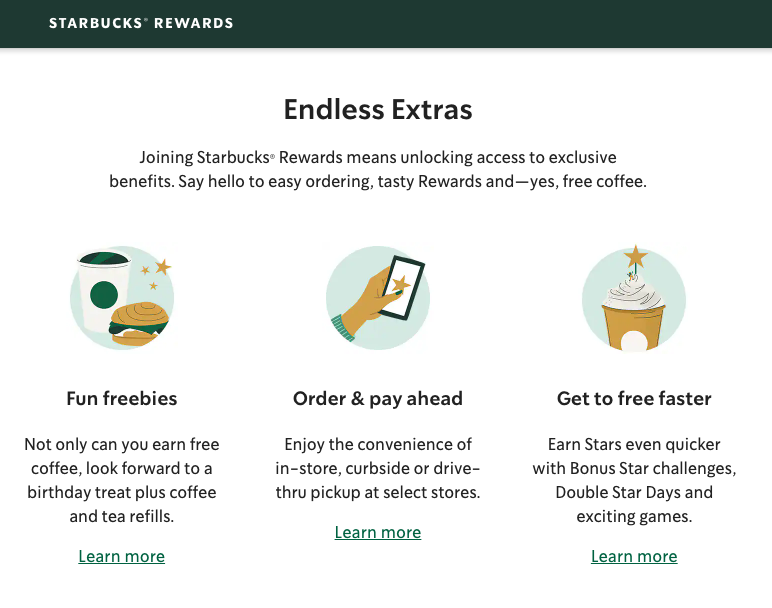
These customers joined because they saw value in the program, earning points they could then redeem for free drinks or food.
Starbucks further incentivized the program by offering double rewards when customers made purchases with a Starbucks gift card.
These customers often spend more and visit more frequently. In fact, 65% of consumers reported modifying the amount they spent to maximize the benefits they receive from these programs, showing how fostering these customer relationships is so important to the long-term success of your brand.
Not using segmentation
Email and SMS marketing are powerful and cost-effective tools for reaching your customer base.
But if you’re sending out only a few standard template messages once or twice a month, you’re missing out on the most effective way to use these channels: segmenting your contacts into specific groups to send customers highly personalized messages.
When you segment your contact lists, you can target the best customer for any given campaign, just like Etsy.
The vintage and handmade ecommerce platform knows its shoppers are looking for unique items, so it makes sure to personalize its marketing emails to match.
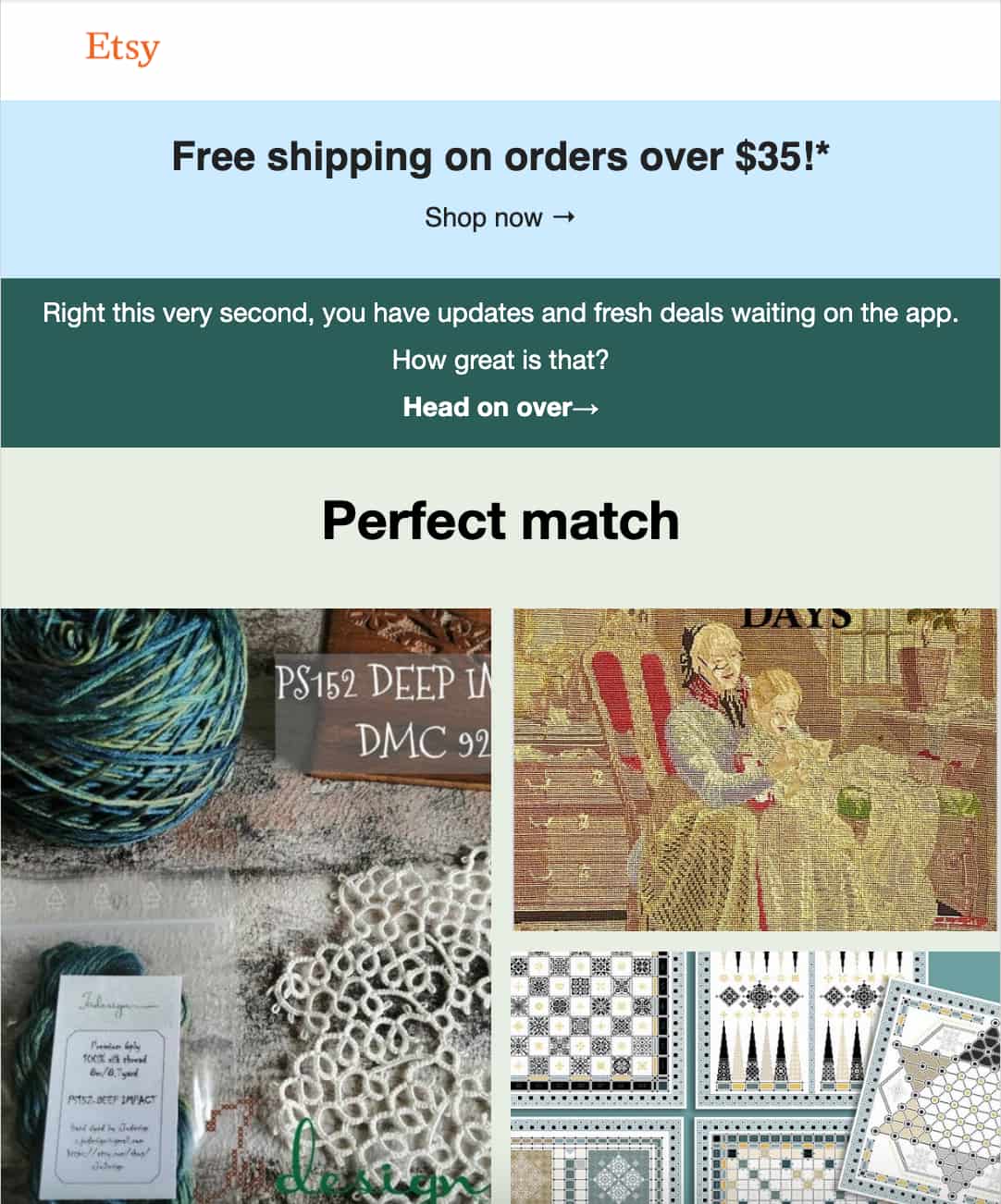
The company sends out a mixture of generalized emails that offer gift suggestions for popular holidays and more segmented messages that go out to jewelry fans, craft fanatics, or people who have been checking out a lot of wall art.
Then, it sweetens the deal with promo codes for discounts like free shipping.
You can also segment your customers based on their previous purchases. Plus, if you sell a product that tends to lead to repeat purchases, like coffee or candy, you can target customers who likely need to stock up soon. So, if it’s been 3 weeks since their 1-month supply of coffee was shipped, send them a reminder about ordering more.
Or not using segmentation properly
Maybe you already segment your contact lists. It’s still possible you aren’t using segmentation to its fullest, however.
Think of all the ways there are to segment customers and which of these could fit your company. While segmenting by gender works for many clothing brands, it doesn’t make sense for most software companies.
Instead, make sure the ways you segment your audience work for your bran_d, like Hilton Hotels & Resorts does.

Hilton segments its guests in a few different ways. While it’ll send offers for different hotels based on whether a customer prefers to stay at a Hampton or Waldorf Astoria, it also offers deals based on geographical location.
By segmenting users based on where they live, Hilton can try to increase customer engagement with deals for weekend getaways or other short stays, all to encourage them to turn to the brand more frequently.
Not using automation
Sending highly specific messages to small segments of your contact list can be a lot of work when you forget to add automation to the mix.
You don’t need to write out each individual message you send. Instead, create a few dozen templates for the most common issues and events, then automate them based on your customer data.
You can send out messages based on historical data (maybe your customers tend to order most often on Thursday evenings) or on another metric of your choosing. It’s easy to do this with Perfect Timing turned on, so your emails go out at the time a prospect is most likely to convert.
Automation doesn’t need to stop at emails and SMS messages, either. You can use chatbots to solve simple issues and ticketing to help redirect customer concerns.
You can also automate product recommendations to encourage upselling or cross-selling with a data-driven tool that learns your customers’ preferences and even determines their potential needs based on previous purchases.
Not using personalization properly
Nearly 80% of consumers said they like to receive personalized product recommendations inspired by their purchasing history. But it can be easy to go overboard with the personalization and forget why users might be shopping in the first place.
Take this message from Amazon, for instance:

Users might be purchasing a gift, especially around the holiday season. This doesn’t mean they want to be shown multiple products like the item they already purchased for weeks afterward.
The same goes for generic phrases in your promotional emails like, “Hey, we found something you might like.” This doesn’t show the level of personalization that customers are looking for, and it doesn’t lead to higher conversions, either. In fact, personalized email bodies have a higher CTR (2.7%) than generic messages (2.1%).
Forgetting about inactive users and cart abandoners
Inactive users haven’t made a purchase recently and might be thinking about leaving your brand. Cart abandoners, meanwhile, have selected what they want to purchase but just haven’t taken the plunge.
Both groups are good targets for your marketing efforts.
For instance, you can automate your outreach to target customers who haven’t checked out within a certain period of time after adding an item to their cart. Then, you can send a follow-up email a few days later offering a promo code to those who still haven’t completed their purchase.
To draw inactive users back in, you can send out special campaigns specifically for them, perhaps with a targeted offer, like this message from Dairy Queen:
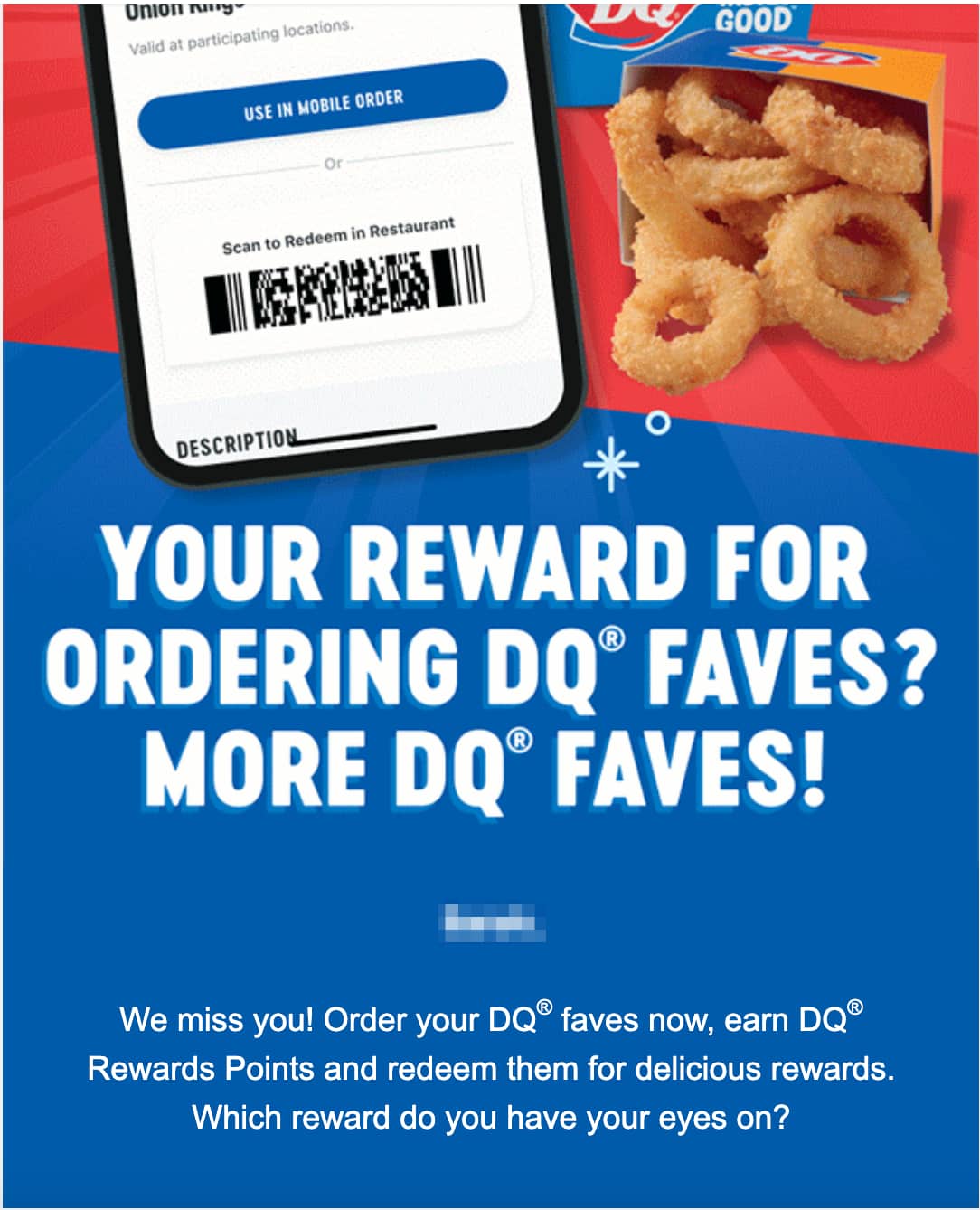
If several weeks go by without a user making a purchase, the popular fast-food chain will send out an email. It reminds the customer of how many reward points they have saved up so far and lets them know about current menu options they might be interested in.
If you aren’t targeting missing customers like this, they might just forget about your brand.
Not adjusting communications to the stages of your buyer's journey
You need to be sure your outreach is personalized for each stage of the buyer's journey.
Prospects who are just learning about your brand probably need more explanation about your products or services compared to those who have been loyal customers for years. Likewise, long-term users will be more interested in tools like self-service than in onboarding guides.
Take this offer from Gap:
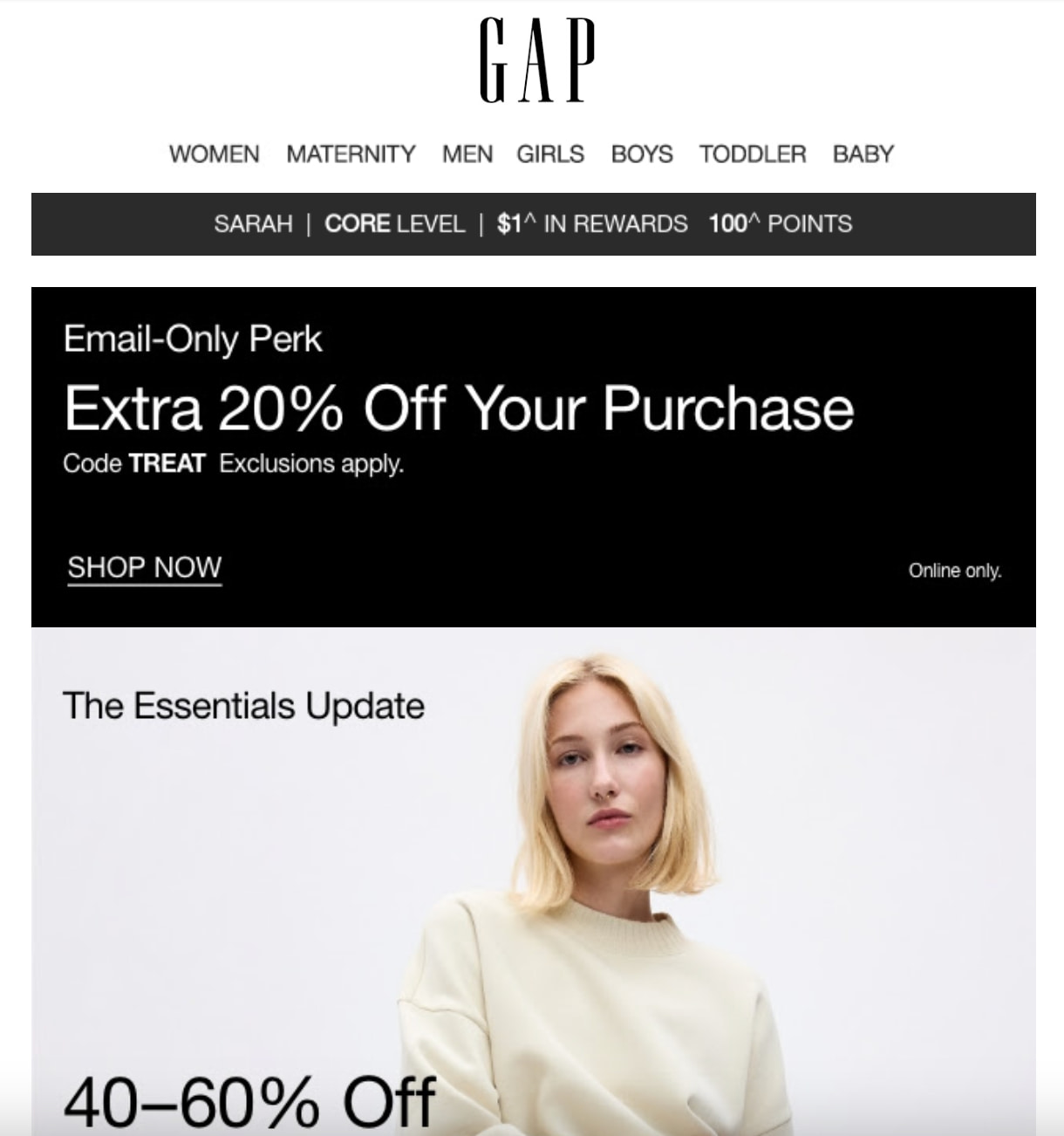
Gap knows that customers who hand over their email addresses have probably already made a purchase with the brand at some point. They know what to expect when they shop in terms of styles and selection. But sometimes, they need a little extra nudge.
By sending out a special discount only to email subscribers, Gap is rewarding their brand loyalty and acknowledging the role these repeat customers play in the company’s success.
To put this into practice, start by sending emails that welcome new customers to your brand. You can even include an exclusive offer or details about your loyalty program to encourage them to return to your online store.
Of course, you have more opportunities to personalize further on in the buyer’s journey. Use the information you have learned to better meet customer needs by creating segmented lists for loyal shoppers and sending out targeted communications that take into account which of your products they use.
Grow Your Business by Boosting Customer Retention
While it’s easy to make some mistakes when trying to grow your bottom line, it’s important to address them early.
Incorporating these effective customer retention strategies can help you increase your CLV and bring in new shoppers who hear about your brand. Your satisfied customers will be more engaged — and more likely to recommend you to others — so working on your customer retention is great for your long-term growth, too.
You’ll be surprised by how much you can customize your outreach with the right tools. With GetResponse MAX, you can optimize your multichannel marketing strategies with advanced segmentation and offer AI product recommendations, all with an unlimited monthly email volume.
Try GetResponse Pilot Program 30 days for free!
Book a demo to know more.